
20 AI Prompts for Small Business Cash Flow & Expense Planning
Use these AI prompts for small business cash flow to organize real income and expense records, build weekly forecasts, review payment timing and identify potential cash shortfalls. Each copy-ready prompt helps you turn actual business figures into useful planning worksheets without inventing financial results.
20 practical prompts · Copy-ready templates · Real-world examples
How to Use AI Prompts for Small Business Cash Flow
Use AI prompts for small business cash flow with real figures from your bookkeeping records. Enter opening cash, expected customer payments, supplier bills, payroll dates and recurring expenses. Never submit private banking credentials or sensitive account information.
When applying AI prompts for small business cash flow, check that forecast dates, totals and payment assumptions match your records. Treat projections as scenarios rather than guaranteed results, and review important financial decisions with a qualified professional.
Four steps to a usable result
Gather Information
Gather opening balances, unpaid invoices, approved supplier bills, payroll dates and recurring expenses from your own records.
Choose the Right Prompt
Choose a cash forecast, expense audit, late-payment scenario or weekly cash-review prompt for the decision at hand.
Enter Accurate Context
Enter real dates and amounts, identify uncertain receipts, and request a week-by-week table with explicit formulas.
Review the Result
Reconcile totals with bookkeeping records and review cash-sensitive decisions with the appropriate professional.
What AI Prompts for Small Business Cash Flow Can Help With
Understand your cash position
Organize actual available balances, restricted funds and records that still need reconciliation.
Spot upcoming payment gaps
Compare customer payment dates with payroll, supplier bills and recurring costs.
Build a 13-week forecast
Map expected inflows and outflows by week with opening and closing cash balances.
Evaluate expense decisions
Review subscriptions, purchase timing and supplier terms using documented amounts.
Test delayed payments
Explore what happens if expected customer receipts arrive 15, 30 or 45 days late.
Review forecasts weekly
Compare projected figures with actual cash movement and assign follow-up actions.
For broader business guidance, explore AI prompts for small business owners. If your cash forecast highlights repeated late payments, try the customer retention prompts for better customer communication and follow-up planning.
Using AI Prompts for Small Business Cash Flow Responsibly
Before you forecast, confirm which money is available today, which invoices are still unpaid and when unavoidable expenses will leave your account. Good cash flow planning separates an expected payment from money you have already received. That difference matters when you schedule payroll, purchase materials or consider a large equipment expense.
Start with a simple weekly cash flow worksheet. List the opening balance, dated incoming payments and dated outgoing payments. Calculate the closing balance for each week, then carry it forward to the next week. Highlight uncertain receipts and make a second forecast showing what changes if those receipts arrive late.
These AI prompts for small business cash flow can help organize the inputs and draft a review agenda, but they cannot verify a bank balance, promise a customer will pay or replace accounting judgment. Compare every calculation against your records and discuss significant decisions with your accountant or bookkeeper.
For additional guidance, read the BDC finance and cash management resources, alongside the AI prompts for business resource for broader operational planning.
20 AI Prompts for Small Business Cash Flow You Can Copy
These AI prompts for small business cash flow cover forecasting, expense reviews, late-payment planning and decision tracking. Copy the relevant prompt, replace placeholders with real figures, then verify any calculations before acting.
Audit & Discovery
Five focused tasks using real cash records and documented assumptions.
Opening Cash Position
Recurring Expense Register
Invoice Aging Review
Payables Calendar
Payment Timing Risk Map
Planning & Analysis
Five focused tasks using real cash records and documented assumptions.
13-Week Cash Forecast
Delayed-Receivable Stress Test
Cash Scenario Builder
Seasonal Cash Pattern
Equipment Purchase Timing
Execution & Communication
Five focused tasks using real cash records and documented assumptions.
Subscription Value Review
Project Gross Margin Check
Budget Variance Investigation
Supplier Payment Terms Review
Reserve Planning Worksheet
Measurement & Improvement
Five focused tasks using real cash records and documented assumptions.
Weekly Cash Review Agenda
Expense Approval Matrix
Forecast-versus-Actual Review
Polite Invoice Payment Reminder
Cash Shortfall Decision Memo
Small Business Cash Flow Planning Example: A Four-Week Forecast
This illustration shows how AI prompts for small business cash flow can structure a weekly forecast. The example is fictional and does not represent actual customer results.
| Input | Example context |
|---|---|
| Opening cash | Illustrative $9,000 |
| Potential receipt | Illustrative $4,000 in week two |
| Scheduled costs | Illustrative $7,500 over four weeks |
Step 1 — Review the input
Start with Prompt 06, the 13-Week Cash Forecast. Enter the illustrative opening cash of $9,000, the expected $4,000 receipt in week two and the dated $7,500 of scheduled costs. Ask for opening balance, receipts, payments and closing balance by week. The precise weekly balances depend on the dates entered.
Step 2 — Review the AI output
Key Takeaway: A usable forecast separates verified transactions from estimated receipts, shows the effect of timing changes and gives you specific figures to review before committing to expenses.
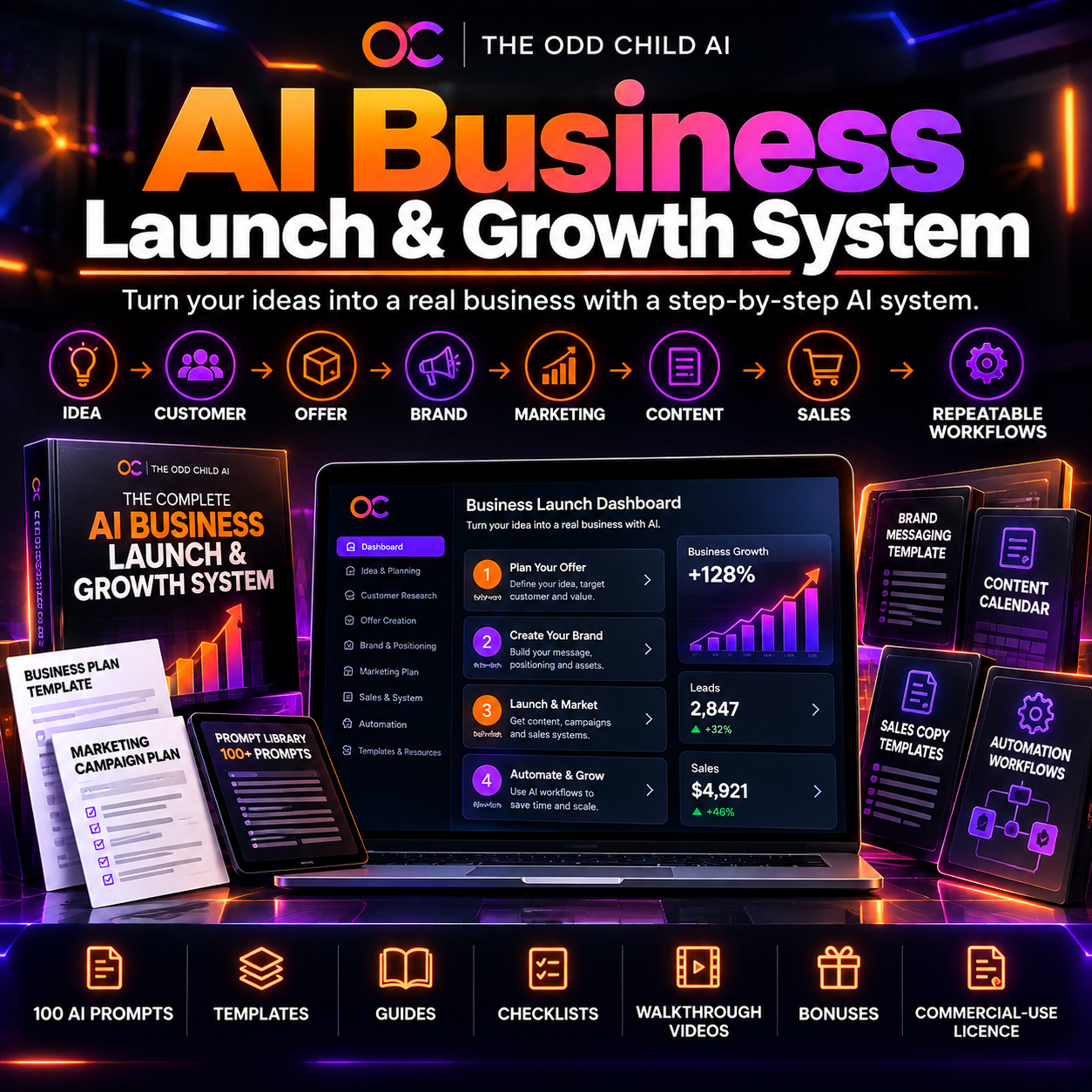
Explore AI Business Launch & Growth System
These 20 AI prompts for small business cash flow help organize forecasts, payment timing and expense reviews. The related downloadable product may provide additional business planning resources; review its current contents before purchasing.
| What You Need | Free AI Prompts | Related Product |
|---|---|---|
| Best for | Individual questions | Additional downloadable materials |
| Access | 20 free prompts on this page | Review current product contents and price |
| Workflow | Pick and adapt individual prompts | Use materials compatible with your needs |
| Accuracy | Verify outputs and claims | Verify the product’s inclusions and licence |
Need a more complete business resource?
Explore the AI Business Launch & Growth System and choose the materials that fit your business.
AI Prompts for Small Business Cash Flow: FAQs
Can AI prepare a reliable small business cash flow forecast?
AI can organize a forecast from the numbers and dates you provide, but its output still needs reconciliation. It cannot verify your bookkeeping or predict when customers will pay.
What information should I enter before using these prompts?
Gather your opening cash balance, expected receipt dates, unpaid invoices, approved bills, payroll dates and regular operating expenses. Remove confidential account details.
How often should a small business review its cash forecast?
A weekly review is a practical starting point for many businesses. Compare forecast and actual cash movement, then update changing payment dates and upcoming obligations.
Can these prompts help when customers pay late?
Yes. Use the delayed-receivable stress test to compare 15-, 30- and 45-day delays and identify weeks that may need attention.
Can AI calculate taxes or replace an accountant?
No. Use these prompts for organization and scenario planning, not for final tax filings, regulated advice or decisions requiring professional financial judgment.
What is the difference between profit and cash flow?
Profit is revenue minus recognized expenses for a period. Cash flow tracks when money actually enters and leaves the business; a profitable business can still face a cash shortage.
Are the 20 cash flow prompts free?
Yes. You can use all 20 prompts on this page without purchasing the related toolkit.
Take your next step
Explore AI Business Launch & Growth System for additional business resources.